
Ops Term of the Month: Operator
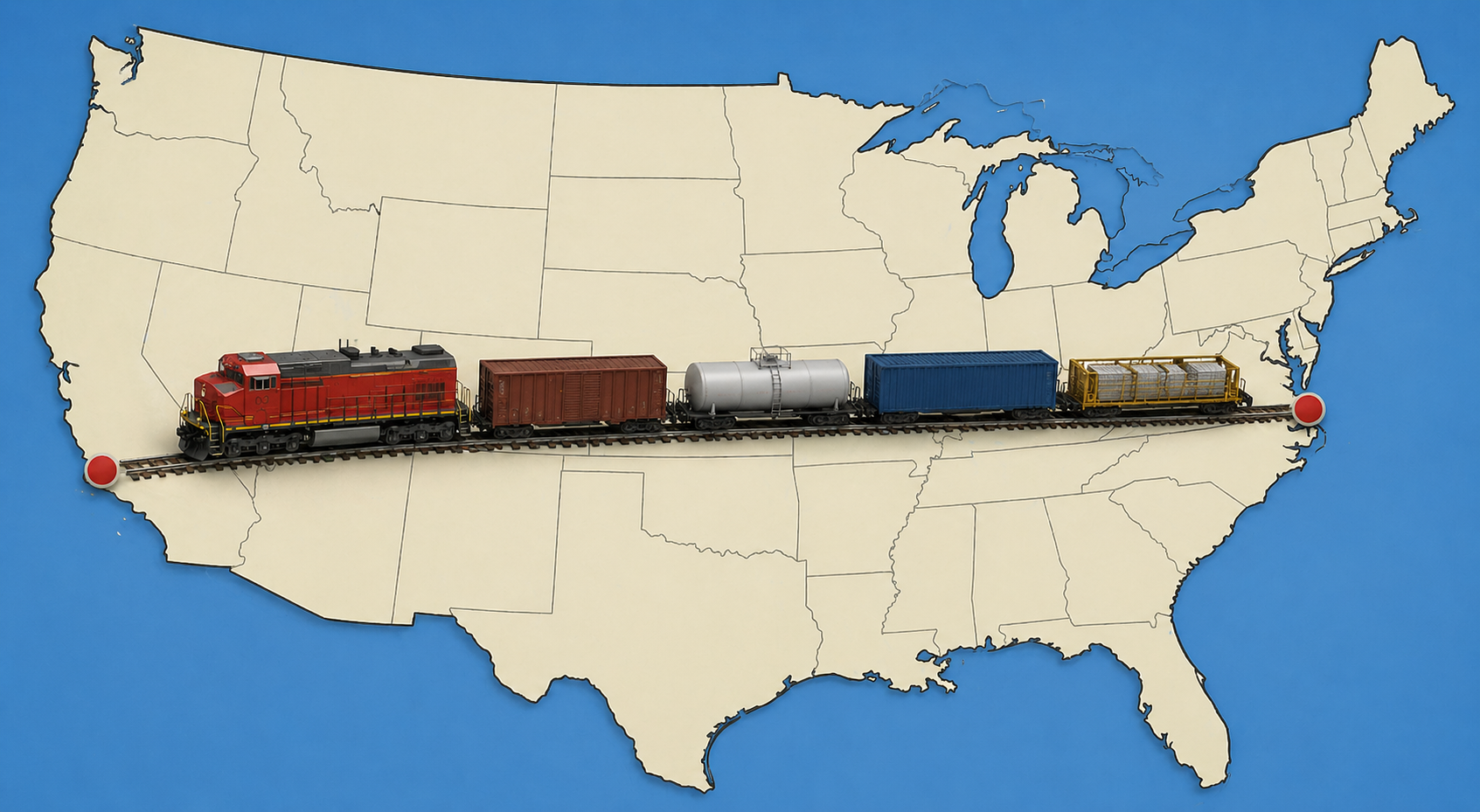
An operator is the person who makes sure the thing actually happens.
Alrighty, so E.TBD is the operations firm for social enterprise. But, I sometimes get blank stares when asked what we do and say anything along the lines of “operations firm,” “operational formation,” or we place “fractional operators.” 😆
This is why I’m pretty excited about this month’s term, ‘cause I get to talk generally about what an operator does. You might know one, you might need one, you might go looking for one after this explanation.
Imagine that a train is traveling toward a destination. In an organizational context, that destination is the vision—what you said you’re going to do, build, or become. The train is the organization itself, the cargo is the work it’s moving, and the passengers are the people journeying toward change.
In real life, train operators (also called engineers) drive the train, controlling its speed, braking, and movement along the tracks. While they handle driving, they rely on a conductor who is responsible for overall safety, managing movement along the track and through different areas, and, in passenger trains, handling the opening and closing of doors. Together, they are responsible for getting the train to its destination safely.
Operators are also conductors.
Not in the real train sense, but in the organizational train sense, operators also conduct. Operators don’t just move the work–drive the train–they also manage the conditions around the work moving–conduct the train–so that the work and the people traveling with it arrive safely. They think about sequencing, timing, communication, and what could go wrong before it does, so they can avoid it / steer clear.
Operators look across the system.
When we generalize operators at E.TBD, it might be better to think about a Chief of Staff or Special Assistant rather than a COO. Some COOs are intrinsically operators, but the COO role itself is about going deep into functions (finance, IT, contracts, compliance, etc.), while the Chief of Staff sees how Operations relates to Program/Service Delivery and to the overall Strategic Vision—and looks across all of it.
Operators see the connections and get the parts, pieces, and people arranged. They hear: “We should launch this next quarter”…and immediately translate that to: who owns it, what are the steps, where does it live, when will it get done, and who is going to actually do it.
They make the train move toward the vision, whether they are conducting or driving.
Great operators are kind generals.
In 2005, in the aftermath of Hurricane Katrina, when many people were displaced and the New Orleans Superdome had turned into a terrible situation for the city’s displaced residents, provisions weren’t being delivered and conditions were deteriorating—President Bush deployed an operator.
[This was also the time when Kanye West–a previous version of Ye, not the current version–had got on that live telecast fundraising show and said “George Bush doesn’t like Black people” and poor Mike Meyers didn’t know what to do. I couldn’t note this time in history without bringing this up.]
Lieutenant General Russel L. Honoré took command of Joint Task Force Katrina to lead recovery operations. I remember watching footage of him landing in the helicopter, walking off the helipad, and immediately starting to yell at people. Yup. But what was he yelling? “Young man, put your gun down” to the deployed soldiers.
Because the intention was clear: this was a humanitarian mission. We are here to help. Act like who we are here to be.
He also immediately looked around, pointed at people, and started directing—you, get those supplies and bring them over there; you, make sure we get food distributed this way; you, get the medical care outfit here and set them up over there. And people started to get helped immediately. He conducted the train and deployed other operators to drive.
That’s what operators do. They align intention with action.
The best operators are kind generals. They are sometimes nice; they are sometimes not-so-nice. But they get things done for the right reasons; for good.
I wanna be like General Honoré one day.
Word to the operators.
Visionaries need operators as partners.
They drive. They conduct. They yell (kindly). They keep people safe.
When they’re in place, trains move.
We shared this article in E.TBD’s newsletter. You can read the full issue here or subscribe here.